Tuesday, November 24, 2020

IPO-bound Biocon Biologics in talks with Abu Dhabi fund ADQ to raise fresh capital


Biocon Biologics is in talks to raise funds from ADQ, the Abu Dhabi government’s sovereign wealth fund, as India’s leading biosimilar firm looks to strengthen its manufacturing muscle and add value to shareholders ahead of a proposed IPO.

The negotiations to raise fresh capital come two weeks after Biocon Biologics, a unit of Kiran Mazumdar Shaw-led Biocon, announced a $150-million infusion by Wall Street powerhouse Goldman Sachs. If the talks fructify, it would mark the fourth successive investment in the company this year.

The last fund-raising round resulted in a pre-money equity valuation of $3.94 billion for the firm, which is aiming for an initial public offering in two to three years. It would also mark the debut investment by ADQ in the Indian pharma sector.

“ADQ has held discussions to invest up to $100 million in Biocon Biologics and due diligence is being carried out on the proposed transaction. The deal is part of the overall strategic plan of value creation for the shareholders through Biocon Biologics, which is gearing up for a listing over the next two to three years,” said one of the persons cited above.

“Biocon Biologics is looking to build value and invest in its R&D and manufacturing capabilities. ADQ was keen to invest in a high-quality pharma and healthcare firm in India with strong pedigree and corporate governance standards,” a second person told Moneycontrol.

A biosimilar is a biologic product that demonstrates similarities with another biologic medicine (commonly known as a reference product) that is already licensed. Clinically, it has no meaningful differences in terms of safety and effectiveness from the reference product, but require regulatory approval.

The Biocon arm has set a target of serving 5 million patients and clocking $1 billion in revenues in FY22.

Sovereign wealth funds like ADQ are well connected and this deal can help Biocon Biologics get better access to the Middle East market. Investment bank Allegro Capital Advisors is advising Biocon Biologics on the fund raise,” he added.

A third person confirmed the ongoing discussions.

In response to an email query from Moneycontrol, a spokesperson for Biocon Biologics said, “We have recently announced about Goldman Sachs investment in Biocon Biologics and would inform about other investments as they mature. As a part of the process, we continue to engage with several global investors in line with the clarifications provided to the Stock exchanges in 2019. We would not like to comment on any specific wealth fund at this point in time.”

Goldman Sachs, private equity player True North and Tata Capital Growth Fund have participated in three previous fund- raising rounds in Biocon Biologics. The company has raised a total of $255 million in 2020.

THE ADQ STRATEGY

ADQ, which was established in 2018, owns assets such as Abu Dhabi Ports, Abu Dhabi Airport and bourse operator ADX. It has also built a portfolio of food and agriculture businesses and recently picked up a 22 percent stake in Dubai-based courier Aramex. Earlier, in November, the fund had announced the acquisition of a 45 percent stake in Swiss commodities trader Louis Dreyfuss Company (LDC).

Established in Abu Dhabi in 2018, ADQ is one of the region's largest holding companies with direct and indirect investments in more than 90 companies. Its portfolio of major enterprises span key sectors across Abu Dhabi's economy, including food and agriculture, aviation, financial services, healthcare, industries, logistics, media, real estate, tourism and hospitality, transport and utilities.

The Middle East investment arm has also rolled out a new $300 million venture capital fund—Alpha Wave Incubation (AWI) Fund—to invest in startups in India and South-East Asia. Reports indicate that AWI is mulling an investment in online insurance platform PolicyBazaar.

BIOCON BIOLOGICS: THE ROAD TO A BIG-BANG LISTING

According to Biocon’s latest annual report, the Biologics business ended FY20 reporting a 29 percent growth in revenue at Rs 1,951 crore.

“The market opportunity is expected to double over the next couple of years with developed market sales projected to increase in FY21 and beyond. The recent launch of Trastuzumab in the US, the upcoming launch of Insulin Glargine in the US, and Pegfilgrastim in the EU coupled with the launch of Insulin Aspart and Bevacizumab in EU and U.S. markets through Mylan in the next calendar year will be drivers of this growth,” the annual elaborated on the biologics segment.

Biocon Biologics has a “presence in the majority of the top 20 markets, which should aid expansion in MoW markets with further uptake, launch of new products and entry into new markets,” it said.

“We expect capex spends to be ~USD 200 million in FY21, split equally between Small Molecules and the Biosimilars businesses. We are well-positioned for success as an early mover in the biosimilars space with a large portfolio of products and limited competition in some of the molecules,” the report added.

“Biocon Biologics has plans to invest $200 million per year in capex for FY21 and FY22. This unlocking of value through PE funding will enable us to fund capex investments for further strengthening our business. Additionally, as the biosimilars business scales up and generates good margins that will also generate operating cash to fund our investment objectives,” said Chinappa MB, CFO, Biocon Biologics in an earlier media interview in August 2020.

According to research report estimates, the global biosimilars market size is expected to grow to $35.7 billion by 2025 from $ 11.8 billion in 2020, at a CAGR of 24.7 percent. The segment is experiencing significant growth due to rising cases of chronic diseases and the increasing demand for biosimilars due to their cost-effectiveness.

Saturday, November 7, 2020

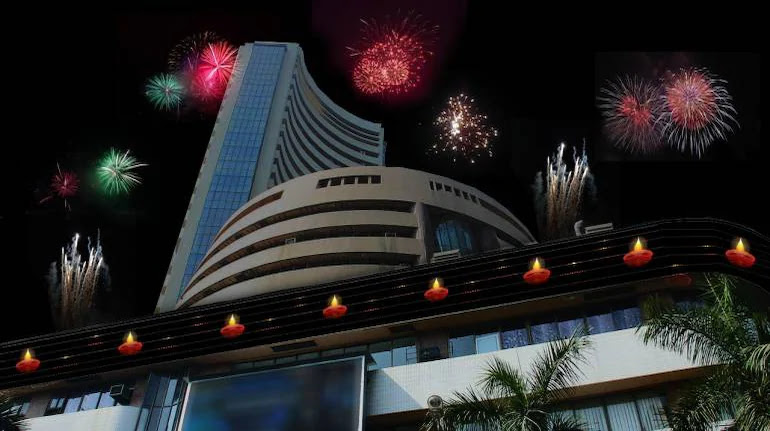
Diwali picks: Brokerages expect these 18 stocks to be in action during Samvat 2077


The market has rallied 4 percent in November so far in anticipation of Democratic Party winning US election and hopes of further supportive measures from Federal Reserve. The benchmarks had hit their recent low on October 30.

Also the data points indicated that the economy has gradually been in a recovery mode given the rising demand in unlock phase. The nation went into a complete lockdown from late March to May end to avoid the spread of coronavirus.

Decent September quarter earnings also induced some optimism as brokerage houses upgraded earnings estimates for FY22. In addition to that, FII inflow continued to support the market.

"From extreme pessimism in March 2020, the current stock market recovery is indeed incredible, now inching closer to the previous life-time high. Notwithstanding the uncertainty on many economic fronts, we believe that the worst is over for the capital markets," Yes Securities said,

"The sharp recovery in the ongoing Q2 FY21 results is nothing short of impressive. Barring few stressed sectors like aviation and multiplexes, the scene is highly encouraging. While many businesses have grown on a year-on-year basis, many others are only 10-20 percent below pre-COVID levels," the brokerage added.

The broader markets also participated in the run with the Nifty Midcap index rising 60 percent and Smallcap above 73 percent since March low.

"The year 2020 is largely about survival, both health-wise and finance-wise. It is also an opportune time to tweak and tighten the portfolio for the next bull run. Vikram Samvat 2077 could well be akin to the year 2003, from a market standpoint," said the brokerage.
Hence, to make the portfolio future-ready, brokerages present 18 power-packed Diwali buys:


KPR Mill

KPR Mill is currently focusing more towards betterment of its portfolio mix - garmenting revenue's share has increased from 28 percent in FY17 to 42 percent in FY20 whereas Yarn and Fabric share has dipped from 57 percent in FY17 to 42 percent in FY20. We expect the mix to get better even further with incremental sales volume coming from 4.2 crore per annum garmenting unit in the medium term (capex: Rs 250 crore; announced recently). As the company further moves down the value chain from Yarn & Fabric to Garmenting and retail, we may see stock getting re-rated. Due to integrated nature of operations and better competitiveness (compared to its peers in the textile industry where profits are generated through cost and process control), the company has delivered return on equity (RoE) and return on capital employed (RoCE) of around 20 percent in FY20 with EBITDA margins of 20 percent.

Manappuram Finance

Increasing share of gold loans and its rising profitability fortifies MGFL's already strong capital and funding/liquidity position. We estimate 10-12 percent consolidated AUM CAGR over FY20-22, which is satisfactory in current scenario and would be better than most other NBFCs. RoE delivery is likely to be sturdy at 24-25 percent in FY21/22 with improving capitalization levels (AUM growth substantially lower than RoE).

Redington India

Redington's working capital days has reduced to just 17 days (in Q1FY21), largely due to aggressive collections (compared to Sales in COVID-19 period), efficient ordering management to keep inventory at minimum levels, and better supplier credit. Also, its ability to manage working capital very well has led to generation of positive free cash flow at a consolidated level of Rs 2,330 crore (in Q1FY21). Additionally, the company is net cash positive and its RoE is likely to remain at 20 percent+ going forward, At CMP, the stock is trading at an attractive valuation of 7.3x FY23E P/E.

Kansai Nerolac Paints

We are positive on Kansai largely backed by expected improvements in structural drivers such as shift towards organized sector, housing push in semi-urban and rural areas, shorter painting cycles, governments focus on increasing rural income and increased consumer awareness in rural areas. Lower raw material prices to aid in higher Gross Margins and most part of negative impact on account of lower absorption of fixed costs would be negated by higher GM's for remaining part of FY21. We expect ROE to move to reach 17 percent by FY23.

Mahindra & Mahindra

We are positive on M&M backed by its efficient operations gained via strong focus on cost optimization, value engineering, improved supply chain management, productivity improvements, and exploitation of synergies between various group businesses. Additionally, we expect improved financials with a) improved performance in core business with FES segment doing well and automotive segment being better placed (higher Auto sales come from rural areas and expects quicker recovery), b) better mix (higher share from FES), and c) exit from loss making subsidiaries. We recommend a buy with the target price of Rs 800.

ICICI Bank

Post the Rs 15,000 crore equity capital raise, the CET-1 ratio of the bank stands increased to around 15.6 percent. Augmented capital base positions ICICI Bank strongly for future growth. The core bank trades at 1.4x FY22E P/ABV; insurance and AMC subsidiaries will continue to accrete value (Rs 120 per share now).

TCI Express

TCIE is one of the better placed express player in the industry with a) its sturdy position in express industry, b) higher contribution from B2B clients, and c) focus on growing SME sector. Also, its return ratios remain best among the industry.

HDFC

The core mortgage business of HDFC is available at an inexpensive valuation (at lower end of long-term historical band) of 1.7-1.8x current P/BV after adjusting for the substantial value of its holdings in group’s banking, insurance and asset management businesses. While COVID has accentuated both growth and asset quality challenges for the mortgage lender, we believe it would be a short-lived phase and a new business cycle could take shape from FY22 driven by major tailwinds of decade-low interest rates, upswing in economy and benign funding environment.

Radico Khaitan

Radico has been consistently growing market share for the last six quarters, especially in North India. In the vodka market, its brand Magic Moments commands 62 percent share and the company hopes to repeat its success in whiskeys; the 8pm brand has crossed sales of 1 crore cases already.

It is well placed to grow revenues by 12-15 percent CAGR and margins in mid to high teens. It will be helped by volume growth in premium segment, high margin exports and price hikes by some states with supportive ENA prices.
Stock trades at 19x FY22 earnings and deserves a re-rating, backed by rising ROCE, strong cashflows and shortening working capital cycle. We envisage a higher dividend payout of 15-20 percent versus 10 percent currently and debt free status in two years' time.

Kotak Mahindra Bank

Post robust Q2 FY21 performance, we raised FY21/22 earnings and ABV estimates by 10-12 percent and 2.5-3 percent respectively on the back of material upgrade in PPOP expectations (higher NII and lower cost growth now) and significant reduction in credit cost assumption.

We estimate the standalone bank to deliver 20-22 percent earnings CAGR on a 6-7 percent loan CAGR over FY20-22 because of expansion in core PPOP margin. We see no deterioration in RoA for the current year despite higher provisions and expect profitability to improve to life-time high in FY22.

CRISIL

We are positive on CRISIL with a) its strong foothold in ratings industry, b) above average growth rate compared to GDP, c) presence into risk-free non lending business, d) high entry barriers, e) asset light business with debt free balance sheet, f) better pricing power compared to peers due to a stronger brand, and g) high profitability ratios (30 percent ROE - CY23). Also, despite disruptions in last 4 years such as demonetization, GST, NBFC crisis and global pandemic, the company has relatively performed well.

Going forward, we believe the company is best placed to gain in cyclical and structural uptick in domestic ratings segment (expects 25 percent+ CAGR PAT growth, seen in earlier cycle) when next round of economic expansion happens post COVID-19 aided by market share gains. Given such quality play, the stock trading is currently trading at an attractive valuation of 23x CY23E P/E.


APL Apollo Tubes

APL Apollo's management's has a strategy to strengthen balance sheet during the lockdown. We believe steel prices are unlikely fall meaningfully hereon which bodes well for APL's margins. We expect strong recovery in volumes and profitability from H2FY21. APL's stock is trading at an attractive valuation of 17x FY22E P/E given that we forecast its EPS to grow 50 percent in FY22.

Alembic Pharmaceuticals

US sales (43 percent of FY20 revenues) grew at around 12 percent CAGR in FY16-20 to Rs 2,000 crore on the back of consistent product launches including limited competition products. Despite being a late entrant, the company has done reasonably well with a product basket of 198 ANDA filings (67 pending final approval).

During Q2FY21 domestic revenue decreased 5.6 percent YoY (23 percent of revenue, down 10.5 percent QoQ) due to industry wide slowdown in Indian Pharma Market (IPM) in the months of April & May, though recovery was seen in the month of June.

Bayer CropScience

We believe agrochemicals segment is least affected due to any natural calamity as food cultivation remains at the heart of any activity in the country. So impact of COVID-19 on Bayer crop would be negligible unlike other most of the companies which are struggling during the pandemic. Also, anti-China sentiments may drive shift of manufacturing hub from China to India, which would benefit the company in a longer run.

Bayer Crop's acquisition of Monsanto India resulted into a bigger entity in agro-chemical and seed. This will unlock the growth potential of Indian agriculture as a global producer and exporter of food, feed and fiber. Further, the merger has resulted in cost efficiencies and revenue synergies and would result in incremental earnings growth for Bayer Crop. The company enjoys a unique position in the domestic agrochemical space due to its ability to offer new innovative products.

Bharti Airtel

With the reduction in competitive intensity and price hike, Bharti's domestic wireless ARPU increased to Rs 157 in Q1FY21 from Rs 129 in Q1FY20. This coupled with Bharti's cost management resulted in India EBITDA margin improving and Bharti expects ARPU to structurally improve from the current levels which augers well for its earnings growth.

The Supreme Court of India has granted the telcos 10 years for payment of AGR dues. The total AGR payment for Bharti is Rs 44,000 crore and it has already made payment of Rs 18,000 crore. We believe that Bharti is well placed to make the balance payment over the stipulated time period. The raising capital for Bharti has never been an issue.

Johnson Controls

The government has taken several initiatives to promote domestic manufacturing of ACs and its components such as Phased manufacturing programme, review of FTA’s and Quality Control Order for component imports. These schemes will help in reducing import dependence and promote indigenization through backward integration. JCH-IN stands to gain due to its focus on backward integrated manufacturing units, India specific R&D, technology and product development capabilities.

Initially, JCH-IN had a strong presence only in premium category. With the launch of new model ‘Kaze’ in split and window AC it entered mass premium segment to reach out to more customers. Additionally, it has added a lot of retail touch points in tier 2&3 cities. It has expanded its distribution reach to 10,000 retail touch points (up 150 percent in 5 years) across 1,350 cities.

Nestle India

Nestle will be least impacted by disruption from COVID-19 as 90 percent of its product portfolio falls under essential category. In packaged food category, industry tailwinds to be positive in Milk Products and Maggi segment (75 percent of Nestle's revenue). Nestle being category leader in 85 percent of its product portfolio, to continue gain market share driven by differentiated brand positioning and superior distribution network.

Nestle enjoys superior pricing power. Despite price hike of 4 percent in Milk Product and Nutrition segment, Nestle gained market share in its largest segment i.e. Infant Milk Formula.

The management has guided for Rs 2,600 crore capex (equivalent to total CAPEX done over last 8-9 years) over next 3-4 years to (i) develop new factory in Sanand, Gujarat and (ii) enhance existing capacities.

Supreme Industries

Currently 63 percent of revenue contribution is from PVC pipes segment. SIL boasts of over 8,000SKUs in pipes segment which is used in around 38 applications. The company is present across all pipes categories and has pan India reach with its extensive 3,300 distributors network. Over the years, the company has maintained its leadership position with around 10 percent revenue share in the domestic pipes market.

SIL plans to spend Rs 350 crore on capacity expansion, particularly on pipes segment to capture incremental growth. The management has guided that total capacity will increase to 700,000 TPA and new plants would be operational by FY22E end. We believe the company's strategy to increase sales by focusing on sales volume bodes well for long term shareholder value creation.


Friday, November 6, 2020

Can beat coronavirus, must prepare for next pandemic now: WHO


The World Health Organisation (WHO) has shared three crucial messages in the virtual session of 73rd World Health Assembly (WHA) and said that the coronavirus can be defeated with science, solutions and solidarity.

"Although this is a global crisis, many countries and cities have successfully prevented or controlled transmission with a comprehensive, evidence-based approach. For the first time, the world has rallied behind a plan to accelerate the development of the vaccines, diagnostics and therapeutics we need, and to ensure they are available to all countries on the basis of equity. The Access to Covid-19 Tools (ACT) Accelerator is delivering real results," WHO said.

WHO also said the world must prepare for the next pandemic now. The World Health Assembly will in this regard consider a draft resolution that strengthens preparedness for health emergencies, such as Covid-19, through more robust compliance with the International Health Regulations (2005).

The WHO said, "This resolution calls on the global health community to ensure that all countries are better equipped to detect and respond to cases of Covid-19 and other dangerous infectious diseases."

The WHO also warned that countries must not backslide on critical health goals.

"The Covid-19 pandemic is a sobering reminder that health is the foundation of social, economic and political stability. It reminds us why WHO’s ‘triple billion’ targets are so important, and why countries must pursue them with even more determination, collaboration and innovation," it said.

More than 47 million Covid-19 cases have now been reported to WHO, and more than 1.2 million people have lost their lives.

The resumed session will discuss a 10-year-plan for addressing neglected tropical diseases, as well as efforts to address meningitis, epilepsy and other neurological disorders, maternal infant and young child nutrition, digital health, and the WHO Global Code of Practice on the International Recruitment of Health Personnel, adopted in 2010.

Wednesday, November 4, 2020

Fosun-owned Gland Pharma IPO price band at ₹1,490-1,500, offer opens 9 Nov

Gland Pharma Ltd has set the price band for its initial public offering at ₹1,490-1,500 per share. The issue opens on 9 November.

The company plans to raise up to ₹1,250 crore through issuance of fresh equity and allow its China-based promoter Fosun Pharma Industrial Pvt Ltd and continuing shareholder Gland Celsus Chemicals Pvt Ltd to sell a part of their stake.

The company will hold a press conference today to give additional details on the IPO.

As per the red herring prospectus filed with Securities and Exchange Board of India, while the company plans to raise ₹1,250 crore, it will also have an offer for sale of up to 34.9 million shares. Of these, up to 19.4 million will be sold by Fosun Pharma, while 10,047,435 shares will be sold by Gland Celsus. The rest will be sold by two trusts who are also continuing shareholders in the company.

Of the total shares, not more than 50% of the stake will be given in qualified institutional placements, while at least 35% will be available for retail investors. The rest will be available for subscription by non-institutional bidders.

Shanghai-based Fosun acquired a 74% stake in Gland Pharma in 2017 for over $1.2 billion, in what was then the largest acquisition of an Indian company by a Chinese firm.

Gland Pharma is a prominent generic injectables-focused company, and one of the fastest growing in the segment by revenue in the US from 2014 to 2019, as per the company’s filing.

Established in Hyderabad in 1978, the company is today present in sterile injectables, oncology and ophthalmics and also focuses on complex injectables and first-to-file opportunities, among others.

For the fiscal to March, the company reported a revenue of ₹2,772.4 crore, as against ₹2,129.7 crore in the previous year. In 2019-20, it reported a profit of ₹772.8 crore against a profit of ₹451.8 crore in the previous fiscal.

In 2019-20, about two-third of its revenue came from the worlds largest pharmaceutical market, the US, with around 18% coming from India.

The IPO comes at a time when relations between the two neighbours are at rock bottom following deadly border clashes in June. As a fallout, India has banned several Chinese apps and restricted the flow of Chinese capital and goods into India.

All investments from China and Hong Kong are required to mandatorily undergo government scrutiny and approval. This has severely slowed down the flow of Chinese capital into Indian firms, especially tech startups.

However, it seems unlikely that Gland Pharma's IPO plans will be affected by diplomatic tensions between the two neighbours.

Kotak Mahindra Capital Co. Ltd, Citigroup Global Markets India Pvt. Ltd, Haitong Securities India Pvt. Ltd and Nomura Financial Advisory and Securities (India) Pvt. Ltd are advising the company on the IPO.

Thursday, October 29, 2020

Unlock 6: What Centre's order means for reopening of schools and colleges


The Union Home Ministry on October 27 extended guidelines for reopening and resumption of social and economic activities in the country to November 30. The existing guidelines for ‘Unlock 5.0’ were issued in September had been originally planned to remain in force till October 31.

Schools across India were closed in March when the nationwide lockdown was imposed to curb the spread of the novel coronavirus.

Over the last few months, a number of activities such as resumption of metro rail services, reopening of shopping malls and restaurants for in-house dining have been allowed in a staggered manner. However, extension of Unlock 5.0 guidelines until November-end means no immediate changes in norms for what is informally being called ‘Unlock 6.0’.

The Centre had permitted state governments and Union Territory (UT) administrations to take decisions for their re-opening of educational institutions outside containment zones, based on the assessment of the situation and subject to standard operating procedures.

SOP for reopening schools

Detailed guidelines to reopen schools were issued by the central government. These include standard operating procedures (SOP) like the duration of the classes, what activities are allowed and how social distancing will be maintained.

According to the guidelines, the schools will have to follow strict sanitisation of school premises before and after classes daily. They will also have to arrange sanitisers and thermal screenings for students and all staff.

Students have the option of not going to school and continue with online classes. However, they need written consent of parents or guardians if they want to attend school in-person.

No change in reopening plans


Schools for some classes have already reopened in Uttar Pradesh, Punjab and Sikkim. Schools in Uttarakhand will reopen on November 2 for classes 10 and 12. Some states like Maharashtra and Gujarat have said they would take a call only after the festive season. Schools in Delhi will remain closed till further orders. Thus, these plans are likely to remain unchanged.


Saturday, October 10, 2020

Vedanta delisting falls through, bankers blame BSE glitch


Billionaire Anil Agarwal-backed Vedanta has failed to complete its delisting process, data available on the BSE shows. Promoters of the metal major required 134.1 crore shares to successfully delist from the exchanges. However, their five-day reverse book building (RBB) process, which ended on October 9 evening, saw only 125.47 crore confirmed bids. As per the demand schedule released by the BSE, about 12.32 crore shares tendered are yet to be confirmed.

Data showed public shareholders tendered 137.1 crore of the total 169.73 crore shares held by them but some bids were pending confirmation from bankers and custodians.

According to a report in Moneylife, bankers to Vedanta Resources, DAM Capital and JP Morgan, have requested SEBI for a one-day extension, saying glitches in the BSE tendering webpage upset public participation.

The share tendering process was tepid till October 8 but it gained momentum on the final day and Vedanta looked on course to a successful delisting.

Life insurance Corporation (LIC), which holds a 6.37 percent stake in the company, tendered all its shares at Rs 320 which is a 267 percent premium over the floor price of Rs 87.25. Two other big mutual funds have tendered their shares at Rs 153 and Rs 160 per share.

The de-listing offer of Vedanta Ltd has failed to de-list the shares from the bourses, Vedanta’s UK promoters required 134 crore shares. According to the BSE website, only 125.47 crore shares were tendered until 7.20 pm.UK promoters of Vedanta hold around 50 per cent in the company and had to acquire 40 per cent stake to de-list.

Vedanta will be needing Rs,42,880 crores if RBB lends at Rs. 320 per share. There are two options left either the promoters pay shareholders by October 23 or the Promoters announce counter offer by October 13.

Thursday, October 8, 2020

Mazagon Dock may deliver strong listing gains. Check IPO allotment status here

Hinting at a strong debut on Monday, shares of Mazagon Dock Shipbuilders were trading at a premium of about 79 per cent in the unlisted market today.

The basis of allotment is expected to be finalised today while shares would get credited in demat accounts of successful applicants by Friday. Investors who could not get shares in the allotment process will get refunds on Thursday.

While UTI Asset Management Company (AMC) has been quoting at a discount in the unlisted market following its not-so-impressive subscription levels, Mazagon Dock Shipbuilders, due its small size of Rs 444 crore and a whopping 157.41 times subscription levels, is holding on to strong premium in the grey market.

Abhay Doshi, an independent dealer in unlisted shares, said improvement in the secondary market sentiment on a rally that entered the fifth day on Wednesday has lifted grey market premium for Mazagon Dock Shipbuilders to around Rs 115 level. It had fallen to Rs 95 earlier. UTI AMC, the other IPO, whose basis of allotment and listing date will be the same as Mazagon, is quoting at a discount of Rs 15-20, after widening as much as Rs 30 per share.

"For Mazagon Dock Shipbuilders, everyone is waiting for the allotment status. We see further upside in premiums, albeit a limited one, if the market sentiment stays strong," Doshi said.

Sagar Shah of Ascent Wealth Advisors pegs Mazagon's grey market premium at Rs 109. At these premium levels, the stock is expected to list at a premium of up to 79.31 per cent.

The IPO by the 'Miniratna' ran from September 29 and October 1 and was sold in the Rs 135-145 price band. Its response at 157.41 times was the highest-ever response to a PSU issue.

High net worth individuals (HNIs) flocked to the issue, and the portion reserved for them was subscribed nearly 679 times, while that reserved for retail investors was filled in nearly 35.63 times. The portion reserved for qualified institutional buyers (QIBs) was subscribed 89.71 times, while employee quota received 3.88 times bids.

Those who bid for the issue can check the allotment status via the stock exchange. On BSE, one can CLICK HERE
Besides, investors can also check the status on the online portal of Alankit Assignments, the registrar to the IPO. The registrar to an issue is a Sebi-registered entity, qualified to act as such, and which electronically processes all applications and carries out the allotment process as per the prospectus.

On Alankit Assignments' web portal, one needs to select the IPO whose data will be populated only when the basis of allotment is declared. One also needs PAN or application ID or client ID and DPID (depository participant identification) to check the allotment status.

The registrar is responsible for complying with the time deadlines for updating the electronic credit of shares to successful applicants, dispatch and uploading of refunds and attending to all investor-related queries after the issue is completed.